The short answer: if you want an app to let your partner know you're thinking of them, you have two kinds to choose from. Tap apps — tap ME, TapTwo, HeartPing and friends — send a buzz to your partner's phone: one tap, "you crossed my mind." Sweet, instant, and single-signal. A mood check-in app like Hueband is the same two-second gesture carrying more: tap Loved and your partner sees it on their watch face within seconds — and instead of vanishing after the buzz, it stays on their widget and adds up into a weekly ring you look back on together.
The one-tap buzz apps: what a buzz can say
The micro-connection market runs on a lovely idea: closeness shouldn't require composing a message. Tap ME, TapTwo, and HeartPing all work the same way — press the button, your partner's phone buzzes. That's the entire interaction, and the low effort is the point. You can send it from a queue, a meeting, a bus.
The limitation is just as simple: a buzz is a single signal. It says someone thought of you — but not how they are, what kind of day they're having, or whether they need anything from you. Ten buzzes are ten identical data points. Charming on day one; a little weightless by month three, because there's nothing to respond to.
Whatever happened to sending your heartbeat?
For a while, the Apple Watch had the most romantic version of this: Digital Touch let you send your actual heartbeat, or a little tapped pattern, to someone's wrist. People genuinely loved it — search interest in "send heartbeat to partner" never fully died.
But sending taps and heartbeats was folded away in recent iOS versions, and even at its peak it shared the tap apps' constraint: every heartbeat was one-shot. It arrived, it played, it was gone. Nothing persisted, nothing accumulated. The nostalgia people feel for it is really a wish for something that hasn't quite existed yet — a wrist-to-wrist signal that stays.
The upgrade: one tap that also says how you are
Here's the reframe worth stealing: a mood check-in is a thinking-of-you signal — it just carries information too. The gesture is the same two seconds as a buzz. But "Loved, 2:14 pm" while you're out running errands says I love you and I thought of you, and "Overwhelmed" at 3 pm says think of me gently tonight. One tap, and your partner doesn't just know they crossed your mind — they know how you actually are, which is what makes the next interaction between you softer and smarter.
The other structural difference is persistence. A buzz interrupts and evaporates. A mood sits there — on the widget, on the watch face — quietly current until you update it. Presence, not just pings.
Thinking-of-you widgets: photos, pets, and moods
If you want the signal visible without opening anything, you're shopping for a widget. Locket puts live photos from your partner on your home screen — genuinely delightful photo presence. Widgetable goes playful: shared pets, photos, and a simple mood bubble, though the mood is shallow and there's no watch app behind it.
Hueband's version is mood presence, everywhere you glance: lock-screen and home-screen widgets on iPhone, home-screen widgets on Android, an Apple Watch app with a watch-face complication and customizable display, and a standalone Wear OS app with a Tile and complication. For "always with you," the wrist beats the home screen — your partner's current mood is one glance away in the middle of anything.
💡 The insight
A buzz says "you crossed my mind." A mood says "here's where I am." The first is a wave from across the street; the second is an open door. Both are kind — but doors are what let someone actually come in.
How to send a one-tap "thinking of you" with Hueband
- Pair privately. One-time invite code, just the two of you. No feed, no followers, no ads on feelings.
- Tap Loved — or make your own signal. There are 20 preset moods, and you can create custom ones with any label, emoji, and color (your partner approves new ones, so your private vocabulary stays private). Plenty of couples build their own "thinking of you" mood.
- They feel it in seconds. The mood lands on their phone, their widget, and their watch face — a glance at the wrist and they know.
- Add the story behind it when you want. An optional 140-character note turns the signal into a moment: "Passed the bakery from our first date."
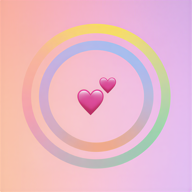
- Let it add up. Every check-in feeds your weekly two-ring chart with a couple sync score and per-day breakdown, with 60 days of history on your device. Your taps become a keepsake instead of a vanished buzz — and if either of you goes quiet, a gentle nudge invites you back.
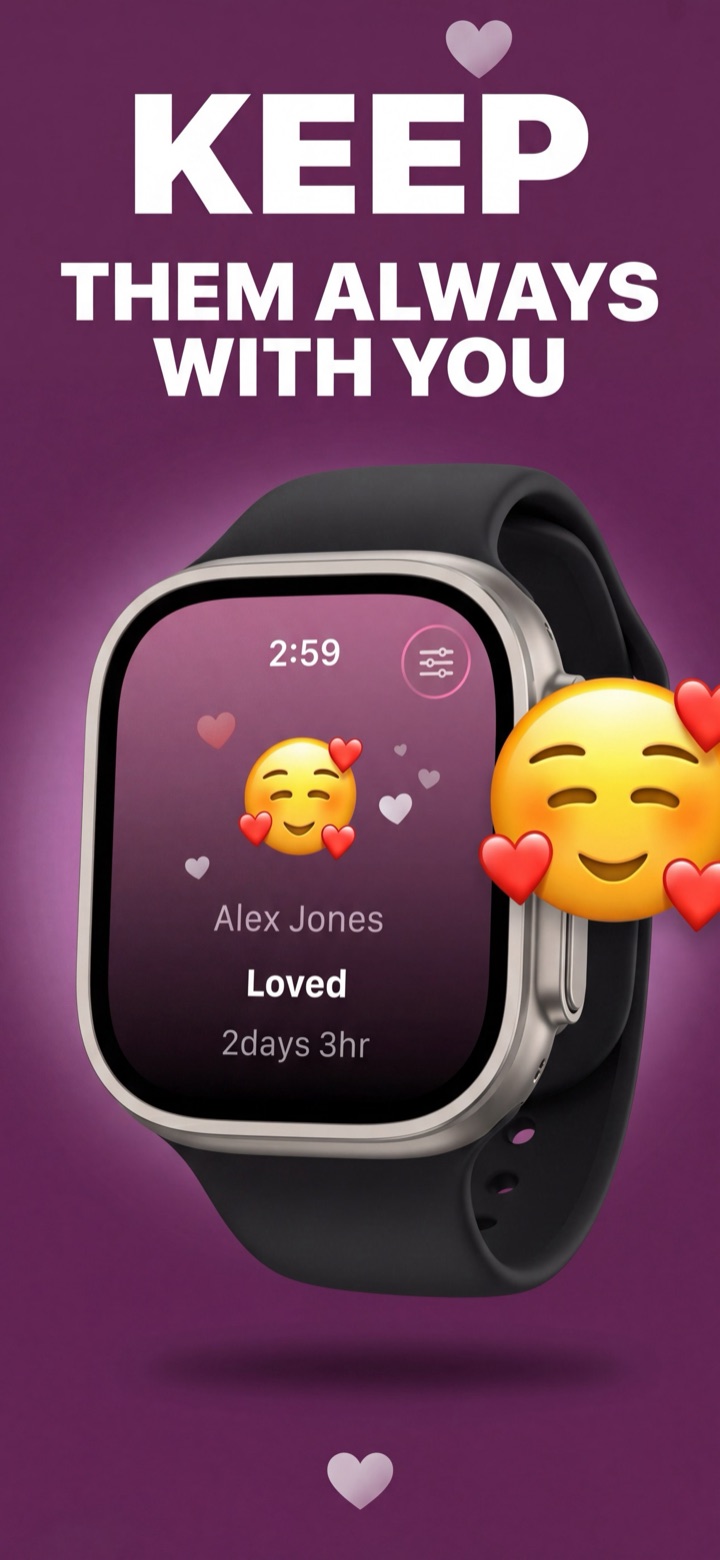
That's the quiet upgrade over the buzz apps: the same two-second impulse, but your partner ends the week with a picture of it — every Loved you sent, right there in the ring.
Common questions
Is there an app to let my partner know I'm thinking of them?
Yes — two kinds. Tap apps (tap ME, TapTwo, HeartPing) send a buzz that means "you crossed my mind." Mood apps carry more: in Hueband, one tap on Loved reaches your partner's phone, watch face, and widget within seconds, and it becomes part of your shared weekly ring instead of disappearing.
Can I still send my heartbeat from my Apple Watch?
Digital Touch taps and heartbeats were folded away in recent iOS versions — and each one was one-shot: it played, then it was gone. A mood check-in is the persistent equivalent; the mood you send stays visible on your partner's watch and widget until you update it.
Do thinking-of-you apps work between iPhone and Android?
Support varies app by app, so check before you both commit. Hueband is built for mixed couples: native iOS and Android apps, an Apple Watch app with complication, a standalone Wear OS app with Tile and complication, and widgets on both platforms.